Custom, fast, SEO-ready
Stores that convert
Custom builds & Integrations
Modernize what you have
We will audit your current site for free and tell you exactly what is holding it back.
Dominate your city
Site health and speed
Authority & backlinks
Shopify & WooCommerce
Find what is holding you back
Get a free SEO health check. We will show you exactly where you are loosing rankings.
Marks that mean something
Colors, fonts, guidelines
Cards, brochures, singage
Get a free brand strategy check. We will show you exactly where you can win hearts.
Smarter content at scale
Setup and automation
Strategy & Management
Google & Meta ads
We work, you deliver
We will have a brief call to learn about your goals and needs and discuss a personalized solution.
More service calls
Local lead generation
Win more bids
Fill your calendar
More patient bookings
High-end client grown
HIPPA-aware marketing
Case lead generation
We work across 35 plus industries. If yours is not listed, chances are we have done it.
Get a free introductory call. We will learn exactly what you are looking for and guide you on next steps.
Not every search ends in a click, but it can still build trust in your brand. We optimize your content to win that space.
Fill out the form below and our team will get back to you within 24 hours.
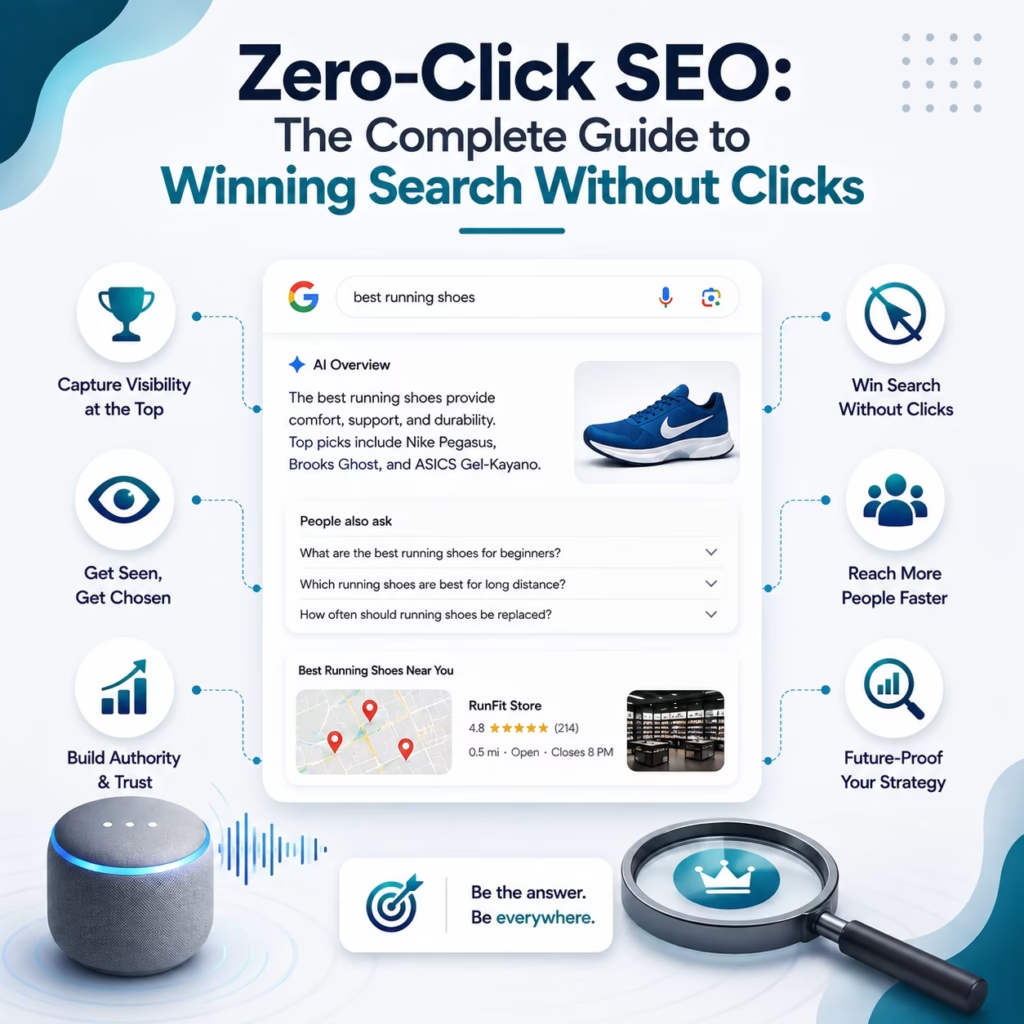
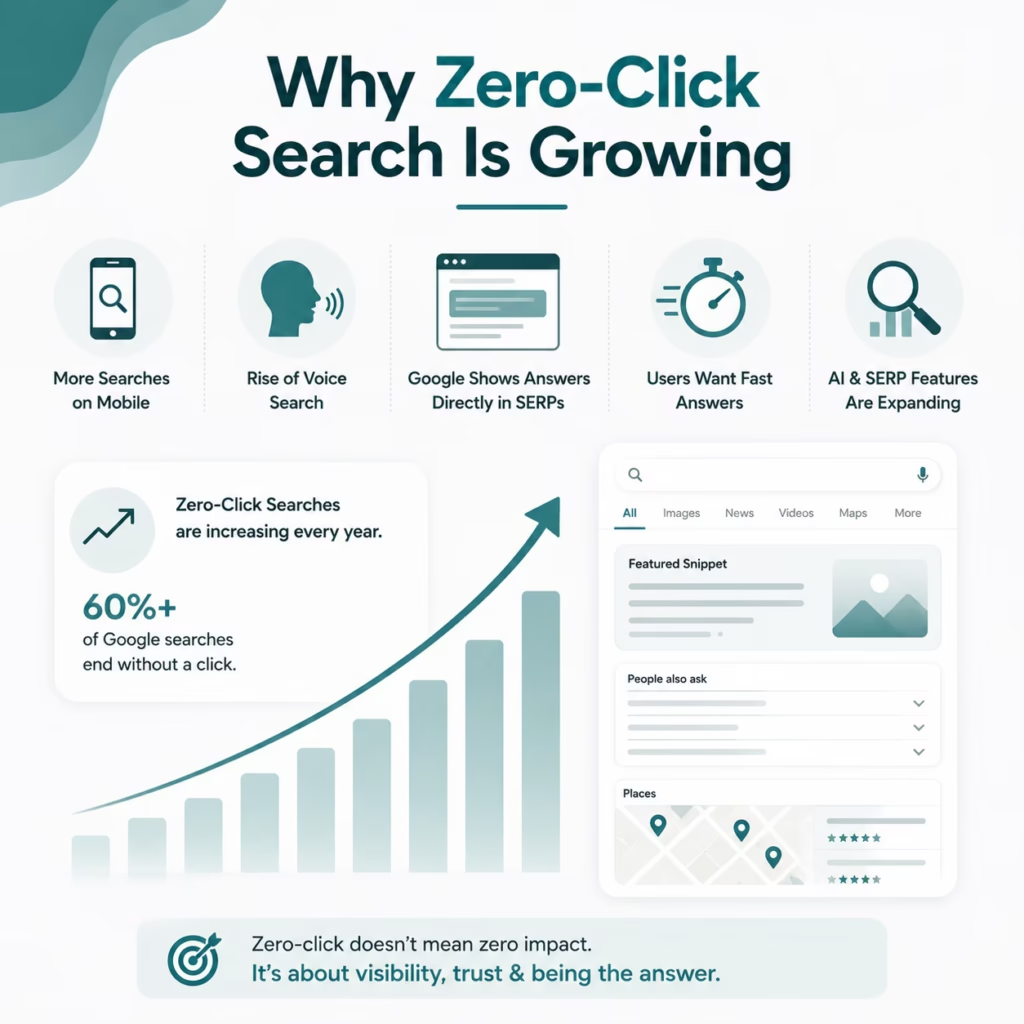
Search doesn’t work the way it used to. More people get their answer directly on the results page and never click through to a website at all. If your SEO strategy is still built entirely around driving clicks, you’re missing a growing share of how people actually find information today.
This guide breaks down what zero-click SEO is, why it’s growing, and how to optimize your content so your brand still gets seen, cited, and trusted, even when the click never happens.
Zero-click SEO is the practice of optimizing your content to appear and perform well in search results that answer a user’s question directly on the page, without requiring them to click through to a website.
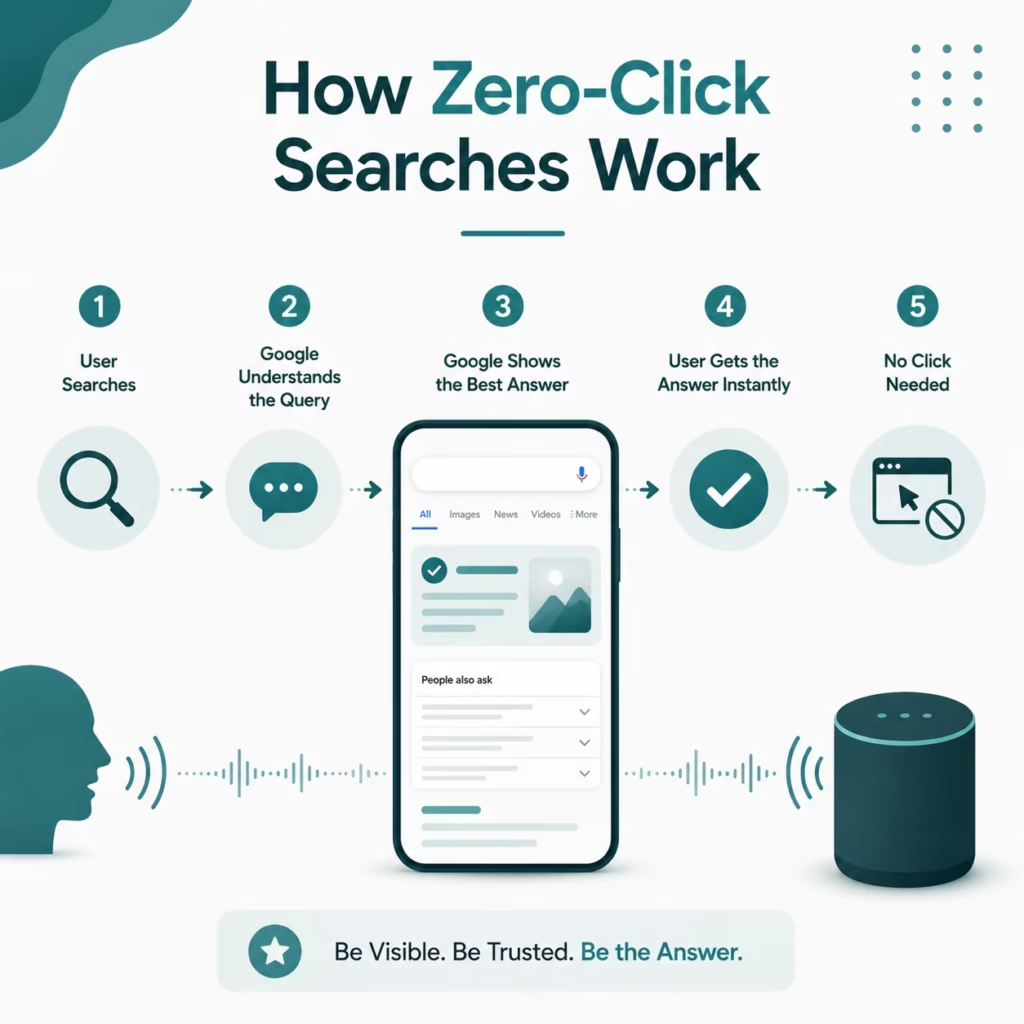
A zero-click search happens whenever Google satisfies the searcher’s intent right there in the search engine results page, through a featured snippet, an AI Overview, a knowledge panel, or a direct answer box. Zero-click searches and zero click searches have become common enough that they now represent a significant share of total Google Search queries.
This shift in search behavior means visibility itself has become a goal, not just traffic. A brand can be seen by thousands of people through a zero-click search without a single click ever showing up in analytics.
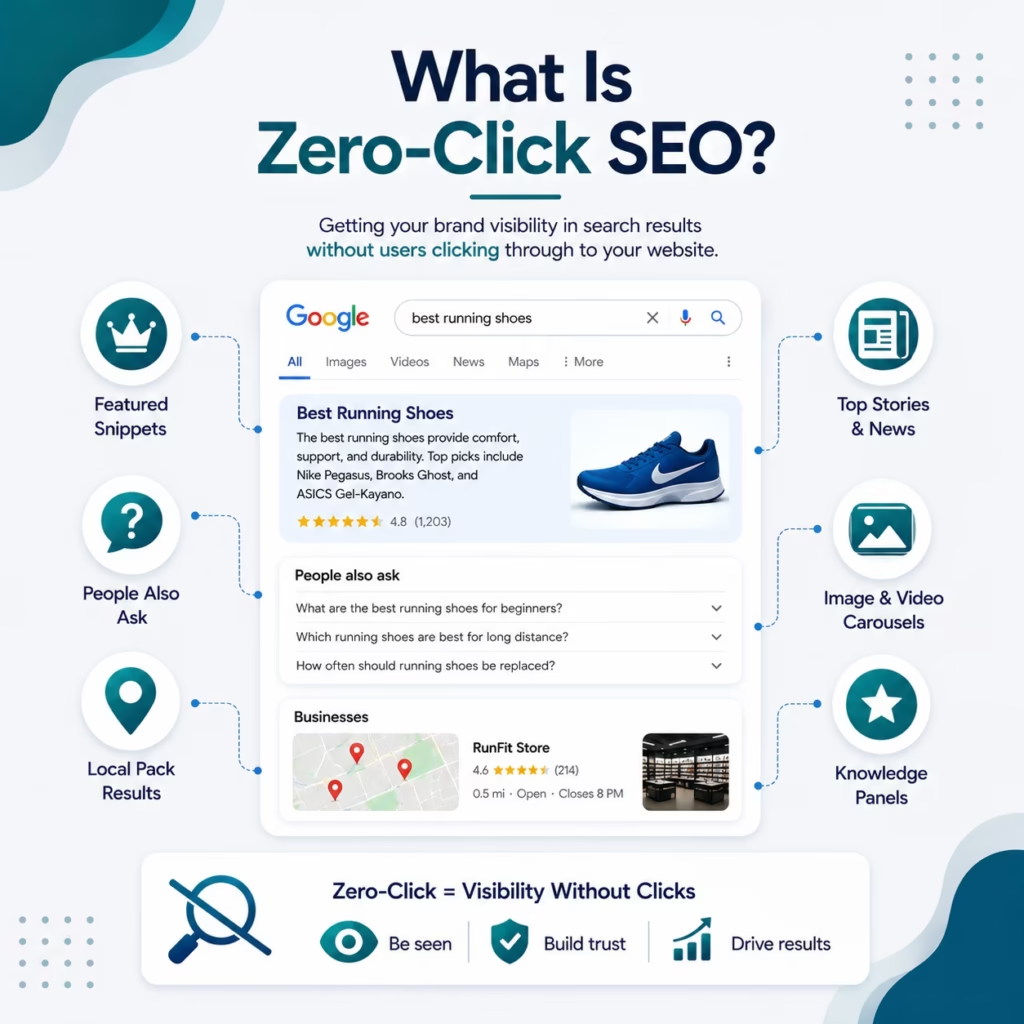
Several different result types can satisfy a query without a click, including:
Each of these pulls content from existing websites. Being the source behind one of them is what zero-click SEO is actually about.
Zero-click search continues to expand for a few clear reasons. AI-generated answers now summarize entire topics instantly, which Google has leaned into as part of a better overall search experience for users who want quick answers, not a list of links to sort through.
Mobile search and voice search behavior also favor instant answers over browsing multiple pages, especially for simple, factual, or local queries. As AI Overviews, AI Mode, and voice assistants become part of daily search behavior, the trend toward zero-click search is accelerating rather than slowing down.
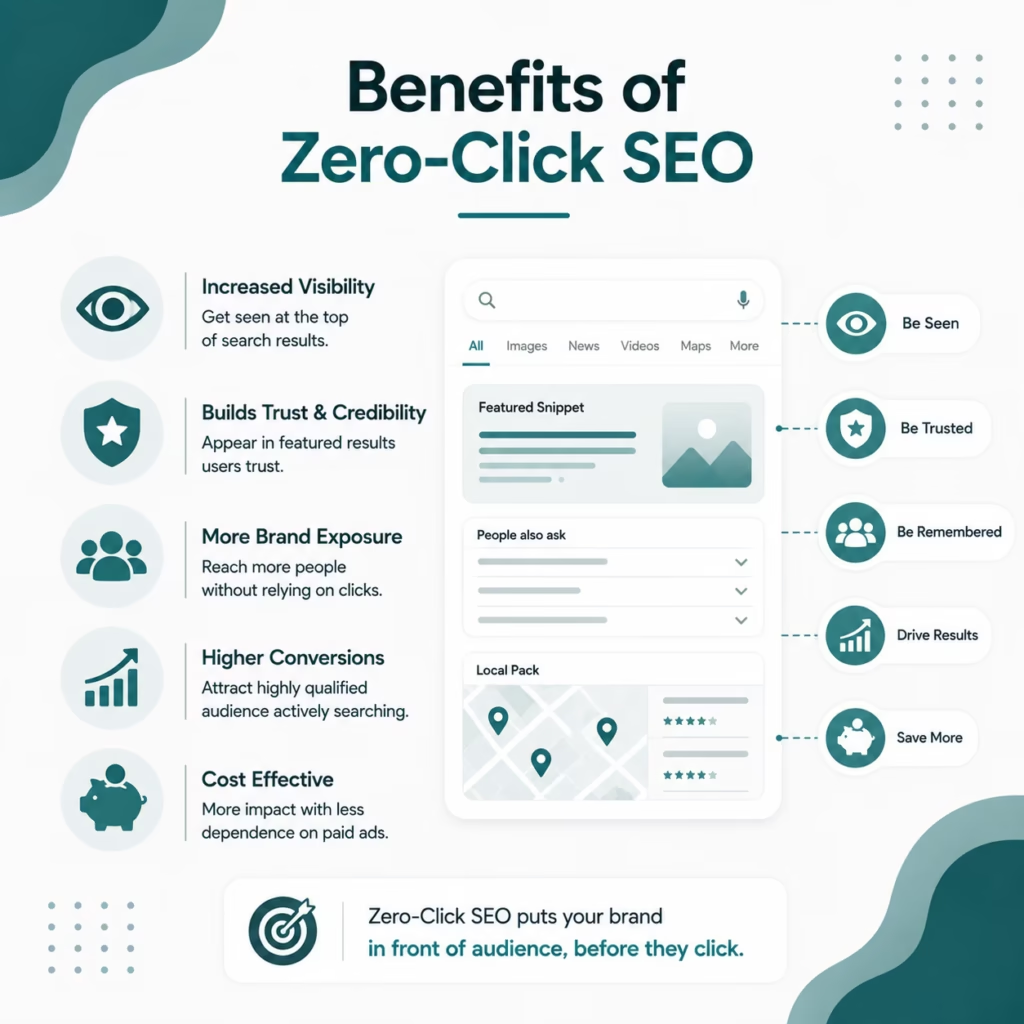
Even without a click, appearing in zero-click results delivers real value, including:
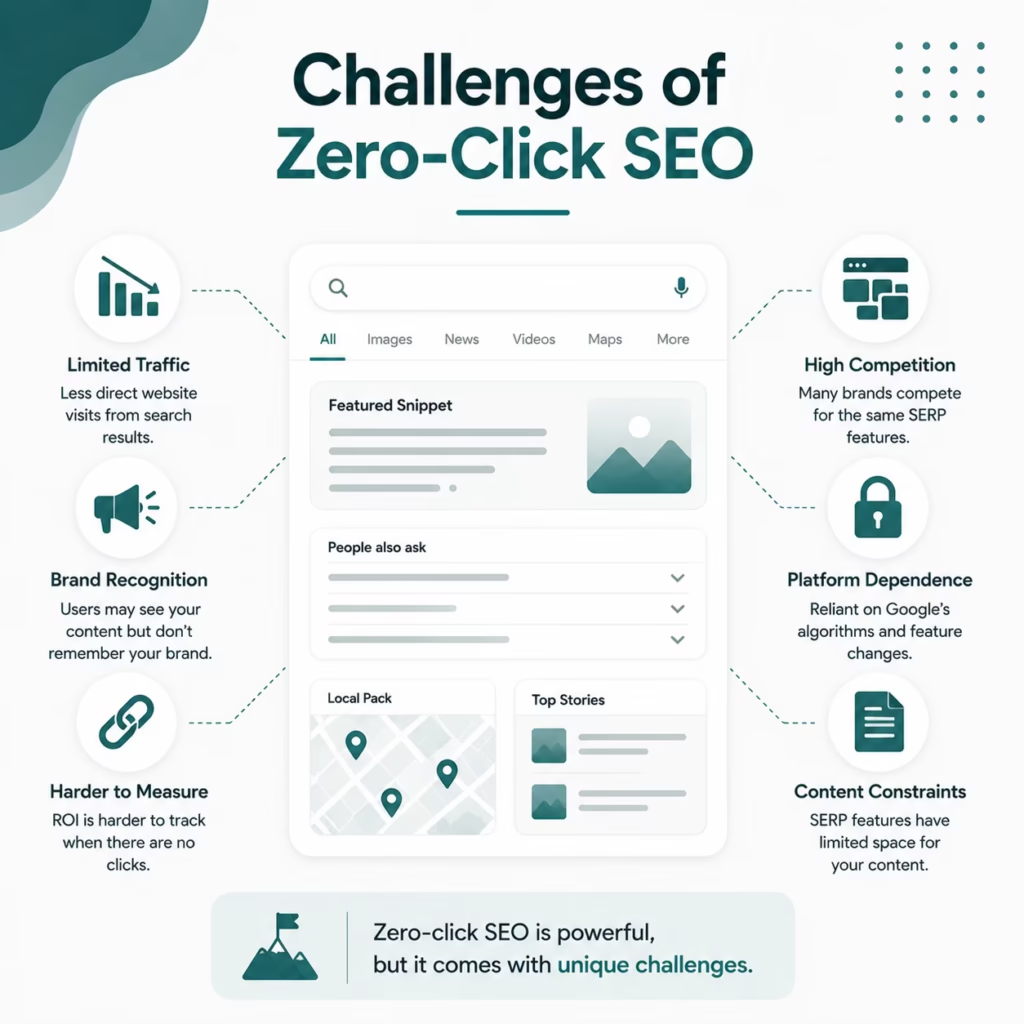
Zero-click SEO isn’t without real tradeoffs. Featured snippets and AI Overviews often reduce click-through rate, since the user’s question gets answered before they ever reach your site.
This creates genuine challenges around measuring success and attribution, since traditional analytics tools are built around tracking clicks and sessions, not citations and impressions. Some content creators also raise concerns about content theft, since AI Overviews summarize original work without always sending meaningful traffic back to the source.
Build immediate authority where users find answers instantly. We optimize your structured data, featured snippets, and knowledge panels to maximize brand visibility and dominate search results without relying on the click.
Write short, direct answers near the top of relevant sections, formatted the way Google and AI Overviews prefer to extract them.
Structure content around clear, well-supported answers with strong entity signals, since this is what earns citations inside AI-generated summaries.
Identify queries already showing a featured snippet and format your content, using concise paragraphs, numbered steps, or tables, to match what's currently ranking.
Implement structured data so search engines can understand your content clearly enough to feature it.
Build depth around your core topics through interconnected content, rather than isolated, one-off articles.
Reference clearly defined entities, people, places, brands, concepts, so search engines and AI systems understand exactly what your content is about.
Answer specific, commonly searched questions directly, giving both users and AI Overviews an easy answer to extract.
Connect related content together, helping search engines understand the full scope of your topical authority.
Structure content around the specific questions that already appear in People Also Ask boxes for your target topics.
Use tables to summarize comparisons clearly, a format both featured snippets and AI Overviews favor.
Prioritize genuinely useful, well-researched content over content built purely to target keywords, since this is what earns lasting visibility across all zero-click formats.
The most useful schema types for zero-click search visibility include Organization, Person, Author, FAQ, Article, HowTo, Breadcrumb, and WebPage schema.
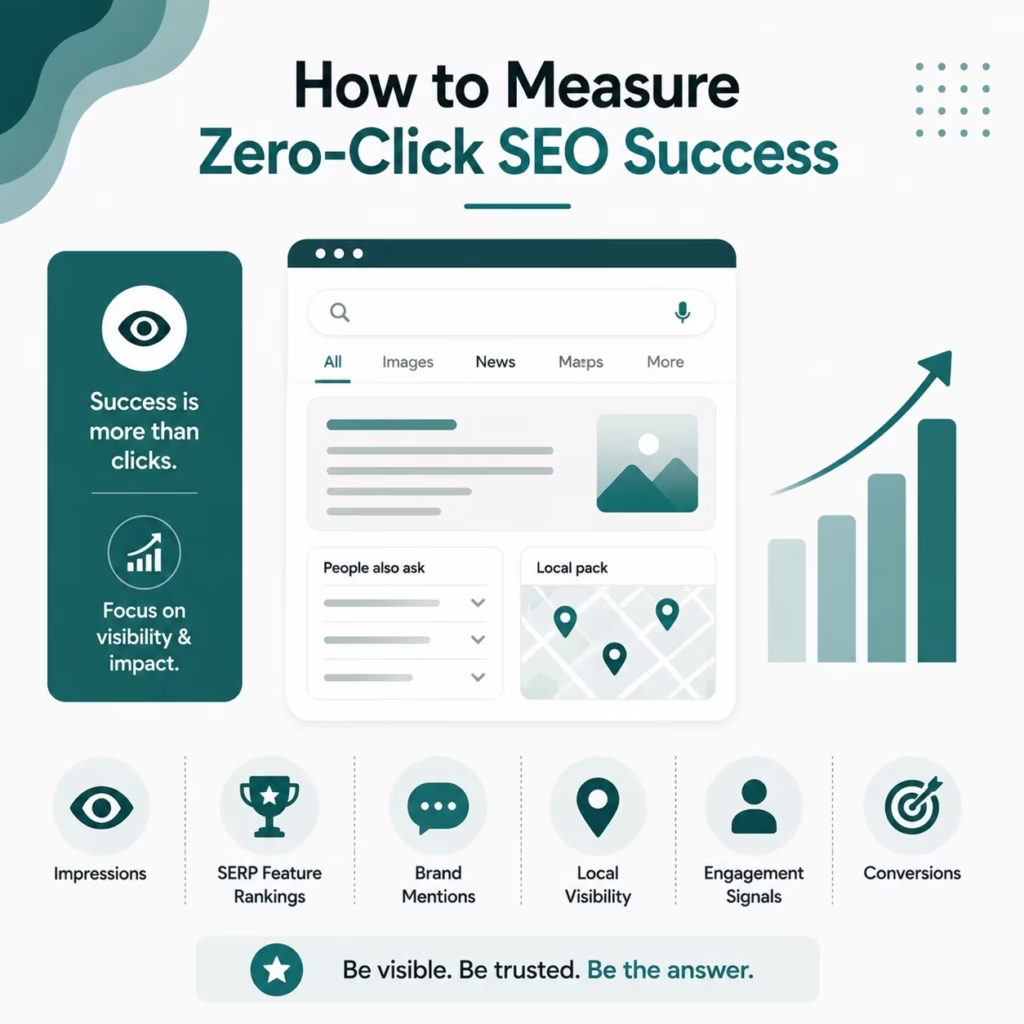
Since traditional traffic metrics don’t capture the full picture, measuring zero-click SEO requires a broader set of indicators, including:
Zero-click search is only going to become more central to how Google and other platforms work. AI Mode, AI Overviews, and generative search continue to expand, making Generative Engine Optimization, GEO SEO, entity SEO, and semantic SEO essential parts of any modern search strategy.
Brands that treat visibility, not just clicks, as a real success metric will be the ones who stay ahead as this shift continues.
Zero-click SEO is the practice of optimizing content to appear in search results that answer a user’s question directly on the page, such as featured snippets or AI Overviews, without requiring a click.
A zero-click search is a search query that gets fully answered on the search results page itself, through a featured snippet, knowledge panel, AI Overview, or similar result.
Zero-click searches are any queries where the user finds their answer directly in the search results, without needing to visit a website.
Google and AI-powered search tools extract information from existing web pages and display it directly on the results page, satisfying the user’s intent without a click.
Zero-click searches are increasing because AI Overviews, voice search, and mobile search behavior all favor instant answers over browsing multiple pages.
Google AI Overview is an AI-generated summary that appears at the top of search results, pulling and synthesizing information from multiple sources into one direct answer.
AI Overview shifts SEO focus from ranking position alone toward being a trusted, citable source, since visibility can now happen through citation rather than a traditional click.
No. Zero-click SEO works alongside traditional SEO, since strong technical and content fundamentals still support both traffic and zero-click visibility.
Featured snippets give your content a highly visible answer placement at the top of search results, building brand visibility even when the searcher doesn’t click through.
Traditional SEO prioritizes traffic and click-through rate, while zero-click SEO prioritizes visibility, citations, and brand awareness, even without a click.
Structure content around clear, direct answers, strong entity signals, and supporting schema markup to improve your chances of being cited in AI Overviews.
Organization, Person, Author, FAQ, Article, HowTo, Breadcrumb, and WebPage schema all help support zero-click visibility.
Answering the specific questions that appear in People Also Ask boxes can help your content earn additional visibility beyond your primary ranking position.
Yes. Appearing in featured snippets, knowledge panels, or AI Overviews puts your brand in front of searchers even without a click, building recognition over time.
Success is measured through impressions, brand mentions, AI citations, featured snippet appearances, branded search growth, and assisted conversions, rather than clicks alone.
Assisted conversions are purchases or signups that happen after a user was influenced by your content, even if the actual conversion occurred through a different visit or channel.
Yes. Local Pack results and Google Business Profile visibility are among the most common zero-click formats local businesses can appear in.
It can reduce click-through rate for certain queries, but the visibility gained often supports brand awareness and assisted conversions elsewhere.
Businesses benefit through increased visibility, stronger brand trust, and more branded searches, even when the specific zero-click result doesn’t generate a direct click.
As AI Overviews, AI Mode, and generative search continue to grow, zero-click SEO will become an increasingly central part of overall search visibility strategy.
Even without a click, appearing in a zero-click result builds brand recognition and trust, often leading to a branded search or direct visit later, sometimes tracked as an assisted conversion rather than a direct one.
A featured snippet is a highlighted answer box that appears above traditional search results, pulled directly from a ranking page to answer the user’s query at a glance.

Zero-click search isn’t something to fight against. It’s something to optimize for.
At Premier Consulting, our zero click SEO agency team helps brands implement featured snippet optimization and full zero click search optimization strategies designed to help you own the search results page, whether or not the click ever happens.